Showing posts with label Shitty basketball. Show all posts

Friday, January 18, 2008

A Day of Light Amongst Current Darkness


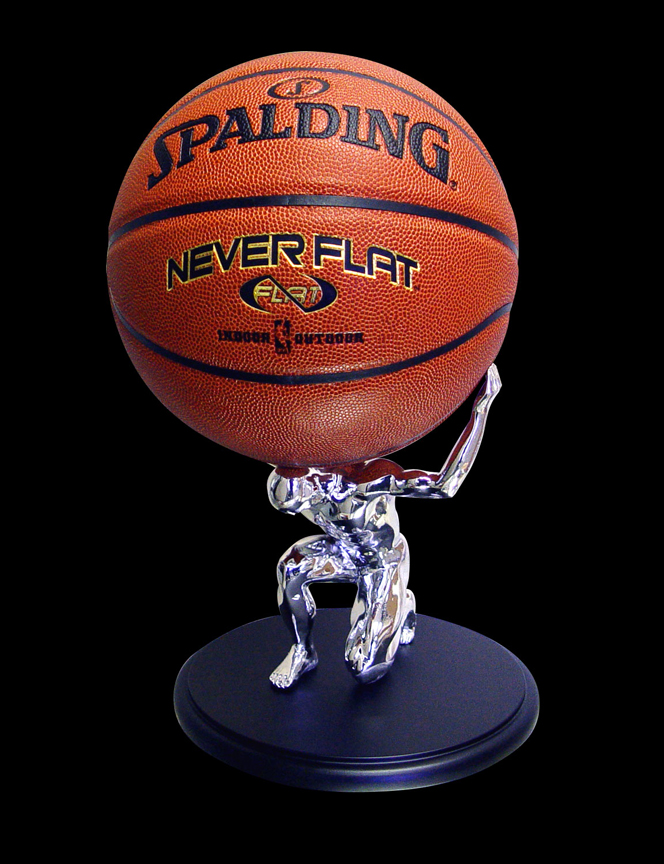
50 degrees. Mid-afternoon. After I bought a new basketball, I traveled the subway to Long Island City. On the way, I realized three things:

1) Men and lesbians: carrying a basketball is as effective a tool to get women to notice you as a puppy or a baby. Try it sometime. Carry a basketball and watch their reaction. I got more smiles than Pryor's prime, no shit, and from women that normally pay no attention to me.

2) Everyone thinks, somewhere in the recesses of their soul, that they are a sports star. When regular subway riders see someone with a ball under their arm, the immediate reaction is not unlike a wife seeing her husband in front of tools: "You know how to use that thing?" Yeah, I do.

3) I don't know shit about the V/E trains. Thought I did. Ended up in Manhattan trying to get to LIC. Who knew? I imagined filled courts-- beautiful day-- and visions of fucking around to attain a triple-double danced in my head.

In any event, I arrived at the empty courts at 4:15: an hour until darkness would end my day. I began warming up: jeans, hoodie over long sleeve shirt, armband tight around my forearm. Hit some simple banks in close, moved back with little success, clang-clang, more bricks than the bible's got psalms. A plague of bricks, my people suffering.

So, off came the jeans. then the hoodie, then the Celtics cap. Hook shots were falling, jumpers missing their mark. Skateboarders crashed while sliding over walls. The night before I was drunk and sad. Each clang of the metal backboard was a large-scale realization of conceptual self. The basketball I dropped 40 bucks on is a step toward spiritual peace. I'm not a happy man. Each shot was a reflective masterpiece: airballs, banks, runners, each one a step toward a pinpoint understanding of my faults. Each time the ball crashed through the net was a reaffirmation of my loneliness, an admission of my inevitable death.

I could have died on the court-- collapsed like Hank Gathers or Reggie Lewis and counted the blessing and sins of my life like a smoker calculating how many cigarettes he/she has for a night at the bar. I would have passed away with my faculties intact, the ball rolling slowly toward the wall until it had no place else to roam. Alas, I did not die. I continued to shoot. OK, hit a nice jumper from the elbow, missed two from a spot I used to know like I knew the contours of my first car. Stop and pop, cross over-- I forget how alone I am the world, all the rejection and loss of the past three years, all the complications of self-awareness. A shot rims out, don't let it go out of bounds, long jumper no good, long rebound, take it in, layup no good, follow is good.

There is no score, there is only the sun setting behind me where the water sends cold wind. The skateboarders are trickling away, passers-by coming from the grocery store looking over a lone, maniacal madman talking to himself, settling himself down. I am a genius in the dusk. The ball is overfull, but getting softer and less alien in my hand. Popped one from the free-throw line. I am to blame for everything, am responsible for everything-- I am enabler and a good friend to no one. I am a tycoon with underwhelming clothes. Finish hard the rim, adjust the shot. Adjustments.

It's getting pretty dark; the skaters are gone. The people passing by are walking faster as the cold gets bitter. My extremities are getting harder to use. Keep shooting, wind playing with the long shots, move in. You are alone because you drive people away. You don't have a direction. Good from the far corner. That felt right like arms embracing for a long period of time. Everyone seems to love you. The ball is light in the left and rolling, rolling away.

Finish up the night; barely visible hoop. Finish with the right, five layups. Finish with the left, five layups. Free-throw. Missed it so I start over. So it goes for fifteen more minutes. Drilling into myself the way I want it: I am not capable of putting all together.

The sun is gone, and I am cold when I finally hit my eleven in a row. Smiling, nodding contentedly, I leave the court and realize that basketball is perfection for me. The Earth takes the ball's rotation, the moon is above me as perfect round white as the splash of the net, the constant pounding of the cement like my heart beat and this might have been the best day of my life.

In summation: I think I am ready to write about basketball. Never thought I could before. Maybe I am ready now.

Sunday, July 01, 2007

A Brief Brush with Mediocrity

Having somehow escaped the massive throng of people at the Continental check-in counter at Newark airport last Friday, I found myself impatiently checking my watch. Boarding time was 8:10 am, the flight at 8:45. It was about 7:45, and I was in the back of the security line. A hellaciously long security line.

Trying to ignore the little girl screaming like she had "a baby" (my 11-year-old nephew Jordan's simile suggestion, far better and funnier than anything I could've written - sadly), I looked up and saw a tall guy at the end of the row behind me. He was about 6'8" or so, a few inches taller than myself. I didn't think anything of it until he got a little closer and I realized - it was Mike Dunleavy Jr.

Surely an NBA player, who makes somewhere in the neighborhood of six or seven million dollars a year, isn't waiting in line for gen pop security? Did he not see the separate entrance for Elite Access members, bypassing the snarling, snaking monster us "normal" people had to endure?

When we got parallel to each other, I looked at him and said, "What, the Pacers can't charter you a jet or something?" He didn't really look at me - more around me - and lamented, "Chhh, I wish."

Wow.

A minute later the kids in front of me had stopped and were whispering. I heard something resembling "Dunleavy" and just said, "Yeah, that's Mike Dunleavy." The younger one looked at me, bug-eyed, and said "Really?" "Yup, it is," I said. "I wanted to ask him how it felt to be on the wrong side of one of the most lopsided trades in NBA history, but I thought that might be a little harsh for this early in the morning." The dad just looked at me and laughed.

The line moved surprisingly quickly, and I had time to grab a Snapple and a banana. I went and sat by the gate, and a few minutes later who should sit down catty-corner from me but one Mr. Dunleavy. There were plenty of seats available, and I couldn't help but wonder if he picked that spot to be around the guy who recognized him earlier. He sat hunched over, eating a breakfast sandwich, his low-cut, ratty white Chuck Taylors (sans laces) pointed pigeonly towards each other. Then it occurred to me that we were probably on the same flight, and I didn't know if I wanted to sit next to him or not. It's a short way from New Jersey to Detroit, and what would I open with? The "So, where you going?" line? Or something like, "Did you ever play against Fred Hoiberg? I'm on my way to his brother's wedding." Then I realized what I was thinking about, and silently scolded myself.

I turned to a magazine while he bogarted the USA Today an older woman had left behind. Finally we boarded, and he was a few people in front of me. I noticed a small bald spot in the back, and it hit me that this dude was going to look exactly like his dad in about 10 years.

As I entered the plane, I became incredibly uncomfortable. This was the smallest aircraft I had ever been on - one of those planes with a single seat on one side of the aisle, two on the other, and maybe 15 rows in all. The ceiling was probably about six feet off the floor, so I cocked my head at the obligatory 45-degree angle. A guy looked up at me and, sensing the awkwardness, gave me the "I feel for ya, buddy" look. All I could muster was a "What the fuck is this shit?"

I passed Dunleavy. He was sitting next to a guy in a Mets hat. I had a seat to myself on the other side, a few rows behind them. That's my view in the picture up there - hardly a Leibovitz, but the cell phone camera is all I had (he's in the gray-and-yellow jacket).

They chatted and laughed for a large part of the flight. I wondered what they talked about. I decided that since the guy had a Mets hat on, he was probably somewhat familiar with the world of pro sports, and chances are he recognized him. But maybe not. They could've talked about the NBA or they could've talked about airport bathrooms. I didn't know and, eventually, I didn't care. I read my book and made funny faces at a young Indian girl.

I was tired, broke and hungry, and had just barely escaped a potentially huge transportation disaster.

But a multi-millionaire - who, despite his professionall shortcomings, seemed to be a pretty down-to-earth, cool enough guy - was on the same cramped, one-male-flight-attendant-only mini-jet as me. And for whatever goofy reason, that made me smile.

Wednesday, March 21, 2007

Outside the Aviary: "They Can Run."

What exactly happened here? Xavier had the “best team in the nation” on the ropes-- a multi-possession lead, the ball, timeouts left to stop momentum if needed, and confidence in their main guard, Drew Lavender. They were playing a near-perfect game. Greg Oden was in foul trouble, they made adjustments ot neutralize Mike Conley Jr. and their shot selection was pretty incredible. Then Coach Sean Miller blew it.

The coach knew he had the game won. You could see it in his face. He was smiling with his players, pumping his fist and keeping them calm. He overthought (like most coaches tend to). He went to well for the play that killed them—the play that kills them all. Hold the ball. Change the pace. Run the clock. Limit possessions. On consecutive possessions Xavier ran the clock and settled for terrible jump shots (one of which Drew Lavender double clutched from just inside the three-point line) when points were there for the taking. Most offenses start around the 25 second mark, and Xavier began their set around 13. Ohio State had to do absolutely NO work to guard them. All they had to do was rest and await their turn with the ball. We all know what happened next.

What most people don’t seem to understand—coaches and announcers especially—is the rhythm of basketball. Xavier is fantastic when they run at a mid-tempo pace. I’ve seen it. They can run or play with normal pacing. Sean Miller seems like the type that doesn’t mind innovation and ad libbing, either. You could tell when Xavier broke the structure of their offense that Miller was happy with the results more than half the time. They were a team with the build and chemistry to upset Ohio State. So, instead of continuing to work for good shots and continuing the pace and spacing that was beating Ohio State, they completely switched their mindset.

When coaches call this offense, it does three things: plays into the psychology of the players on the court, takes the ball away from the players that control the ball and it changes the pacing. You can see whether a team will panic in big situations by studying run reactions. Whether your team is putting together runs or emphatically scraping for every point in a back and forth contest, there are times when you know if the two teams on the floor can handle pressure. At the end of the game, Sean Miller essentially said to his team: we cannot handle the pressure. Ohio State responded and Xavier didn’t. Part of the reason was the change in tempo—from Xavier being in control of the game to admitting they were not capable of stopping Ohio State and playing keep away. That plays into the psyche of a club used to winning. As soon as I get the ball I am going to score is different from as soon as I get the ball I HAVE to score. If Xavier continues to run their offense, they score at least once in their held ball possessions or, at the very least, they keep the pressure on Ohio State to think they HAVE to score. Playing keep away makes a good scorer want the ball more thus playing into their hands.

The exact opposite is true for the players holding the ball. They have done enough right to earn a multi-possession lead and their reward is to stand around and overthink the defense. What was working is now out of the question. Have you ever watched—I mean really WATCHED a team that is standing toward the end of a game? The point guard dribbles and watches motion that isn’t happening yet. Overthinking. The coach is doing the same thing. Coaches can’t think of what will go wrong. They can only consider beating the other team—running their set well enough to produce a good shot. Now, though, the players and the coach are just thinking. The rhythm of the game is undulating through their minds, but it is as dead as it can be on the court itself. Announcers think this is smart basketball and mature decision making from that young man or even a veteran coach making a veteran decision or other such nonsense. Meanwhile, the defense’s workload is shrinking. Opposing players are standing and waiting. Resting—considering how they will beat their man or where they will be open after the inevitable penetration.

After these held ball possessions, consider how little the men have actually touched the ball in a meaningful way. Most teams start their offense around the twelve-fifteen second mark on the shot clock on a slow down set. This allows the point guard to distribute a far less number of meaningful dribbles and passes than on a normal possession. While it is important not to take a quick shot, it is still important to get a quality shot. Most of these possessions end with one of three things: a hurried long ball, a failed try for penetration or a decent, if not good, shot. Running a 13 second shot clock is setting the offense up for a two-thirds failure rate and keeping the ball out of the team’s hands (remember, the same team that has gotten you a lead to begin with) when they are most ready to bury their opponent.

Sean Miller, in effect, ruined his team’s killer instinct by overthinking a simple process. Run the offense. Take good shots. Keep doing what you did and the lead will stay. If it doesn’t, it is not because you didn’t limit possessions. It’s not because you took terrible shots at the shot clock’s buzzer. It’s not because the tempo wasn’t in your favor. It’s because their players responded to the pressure you put on them. That’s it. It's such a simple rule for such a simple game: don't stop winning the game. Slowing down the game like this is basically like running the Prevent Defense. The only thing it prevents is winning.

I was pacing. I was moving more than the Xavier offense and I was saying—run the ball down their throats (and I'm not even a Xavier fan). Go inside. Oden was out. There was no shot blocker, no reason to fear them. Ohio State was defeated. Sean Miller and his announcing buddies made a classic mistake. They lost all their momentum at the worst possible time. These decisions make me wonder, who the hell is in college here? Is it the coach, the announcers, or the players? The latter are told to listen when the two previous have a lot more to learn. Meanwhile, the Xavier players have the rest of their lives to think about losing this game rather than all week to bask in the victory and prepare to play again. Good thinking, Coach.

(By the way, my dad would kill me if I didn't say this: I can see Herb Sendek really wore off on Sean Miller.)


SWEET 16 PREDICTIONS:
USC over UNC (If there is a God).
G'Town over Vandy (If there is a chance for my bracket).
OSU over Tennessee (If the "winning a close game you should have lost" corollary is true).
Texas A&M over Memphis (If the Law can prevail... sorry).
UCLA over Pitt (If the Pac-10 is all that good).
So Ill over Kansas (If the world were completely insane).
Oregon over UNLV (If the world makes any sense).
Florida over Butler (If I can stand to watch it).

Wednesday, February 07, 2007

It Must Have Something To Do With The Altitude

In honor of the awesome, Earth-shattering, cataclysmic, historic game between North Carolina and Duke tonight, as well as previously-rolling and 15th-ranked Air Force's ass-whupping at the hands of a decent San Diego State team, I'm reminded of a fun assignment I had in college, oh, about 73 years ago.

For a magazine writing class, or a news writing class (hey - do you remember stuff like that from college? Didn't think so) we were given an open-ended assignment. Basically, come up with your own story, and interview a national media member.

Oh boy.

I had covered the men's basketball team at Colorado State, and I was curious as to why Colorado schools had never really done much in the NCAA Basketball Tournament. There were three Division-1 schools; surely, at some point, one of them should have been good enough to make a deep run, right?

So I called up ESPN hoping to have Dick Vitale's verbal stylings turn my brain into applesauce, only to be told that he was unavailable.

Damn.

Instead I got to chat with Jay Bilas who, to my immediate and scared-shitless surprise, did not mention Duke once. I told him that this was just an assignment for a class and wouldn't be published anywhere, but he seemed so intrigued by the question that we talked for a good 30 to 45 minutes.

The question? Why do Colorado college teams suck so bad at hoops?

Of course, I never got a definitive answer. How can you sum up hundreds of seasons of futility? You can't. Bilas tried, though, and he was very candid, talking about the high school players in the state, the programs' commitments to football, lack of quality coaching, etc. He also mentioned that plenty of other states are in a similar situation.

That conversation was a good seven or eight years ago. Things haven't changed much. Lets take a quick peek at the three schools, and their situations.

AIR FORCE (20-4, 7-3 T-2nd MWC): Well, their tournament history has pretty much come in the last few years, and obviously they're on the way up with former Denver Nuggets coach Jeff Bzdelik at the helm. But one of Bilas's main points about Air Force is that it's hard to recruit tall, athletic players to a service school. Bzdelik may get his team to do the little things right, but in the Tourney you need talent. Plain and simple.

COLORADO STATE (14-8, 4-6 T-5th MWC): When your school's basketball history mainly consists of the fact that this movie was shot there, well, that's just not epic, you know? When I left, Ritchie McKay had just bolted for Oregon State, and after a few years there he rolled on to New Mexico. Dale Layer has presented some stability, and there have been some solid players (most notably NBA prospect Jason Smith, a 7-foot junior averaging 16 points, 9 rebounds and about 2 blocks a game), but the last time they got into the dance was 2003, where they miraculously won the Mountain West tournament and then were immediately rewarded by getting to play Duke. Sweet.

COLORADO (6-13, 2-7 T-Last in Big 12): Hey, it's a football school, you know? The Buffs have produced some talent (NBA Finals MVP Chauncey Billups, born-and-bred in Denver, and the Pacers' David Harrison), but Ricardo Patton has had an up-and-down tenure, and probably won't last much longer. Although the fact that their beat-down of Indiana in the 1997 tourney forced Bob Knight to walk over two miles back to the team hotel in the rain at 1 a.m. was pretty freaking sweet.

It seems like Colorado would have the best chance at actually turning their program around, what with all the parties and money in Boulder. But good news for the Rams and Falcons: the last non-BCS school to play for the national championship? Fellow Mountain West school Utah, in 1998. But even then you had Rick Majerus, Andre Miller and Michael Doleac. That's just an ass-kicking trio right there, friends.

So, all in all, when you find yourself in the Centennial State and you want to check out some hoops, head to the Pepsi Center and check out the frantic musings of Allen Iverson, Carmelo Anthony, Marcus Camby and Co. If you have to go to a college game, make sure somebody gets you in for free. And then drink. A lot.

You'll need it.